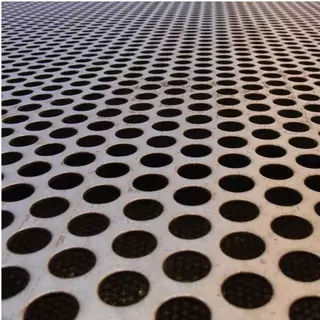
Here is a question buyers keep asking: Why do two perforated sheets look similar but behave so differently on site?
The answer usually comes down to one choice made early. Laser cutting or punching.
Both methods are widely used for customised perforated sheet metal. Both have strengths, but both have limits.
This analysis covers the real difference between laser cutting and punching, when each method works best, and how to choose the right one for your project without wasting time or money.
Perforated sheet metal is no longer just about holes in metal. Today, it is used for facades, screens, ceilings, railings, and interior panels. Design and performance now go together.
The cutting method affects:
If you choose the wrong method, you may face delays, higher costs, or design limits that show up too late.
Laser cutting uses a focused beam of light to cut metal. The material is melted in the beam and is in line with a digital file of the design.
This method is popular for customised perforated sheets with complex patterns.
Laser cutting is often chosen for architectural facades, feature screens, and branded panels where looks matter.
Laser cutting is not perfect for every job.
Common limits include:
For projects with thousands of identical sheets, the cost can climb fast.
Punching uses a mechanical press with a tool that punches holes through the sheet. Each punch creates a hole in one fast movement.
This method has been used for decades and still dominates many industrial projects.
Punching is common in ventilation panels, safety guards, industrial screens, and parking structures.
Punching also has trade-offs.
If your design changes often, punching can become expensive.
Here is a simple comparison many buyers find useful:
This comparison also helps answer many featured snippet searches online.
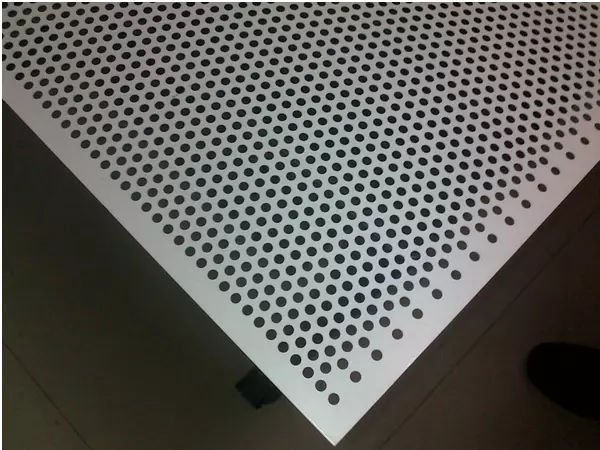
One of the architectural firms of Dubai specified laser-cut perforated aluminium panels for the facade of a mall. It was designed with gradient hole sizes in order to regulate light. Laser cutting made this possible without custom tools.
In contrast, an industrial warehouse in Abu Dhabi used punched perforated sheets for ventilation panels. The pattern was standard. The quantity was high. Punching reduced the cost by nearly 30 percent.
Ask yourself these questions early:
If design freedom and aesthetics lead, laser cutting usually wins; if volume and cost lead, punching is often the better choice.
From experience, problems happen when the method is chosen after the design is locked. Bring fabricators into the discussion early.
In their production, hybrid production is growing in 2026. The projects are to embrace laser cutting of the areas of features and punching of areas in the back of the house.
Other trends include:
Search engines now reward content that explains decisions clearly. Clients expect suppliers to guide them, not just cut metal.
Laser cutting and punching both have a place in customised perforated sheet metal. The right choice depends on design complexity, volume, budget, and timeline.
Key takeaways:
If you are planning a perforated metal project and want guidance that balances design and production, speak with Dinco Aluminium for practical support from concept to supply.
With multiple warehouse locations in Abu Dhbai, Dubai & Sharjah, we ensure speedy deliveries to our customers all across the uae
